Current Recipient
Oscar Lansen, Teaching PRofessor
Department of History
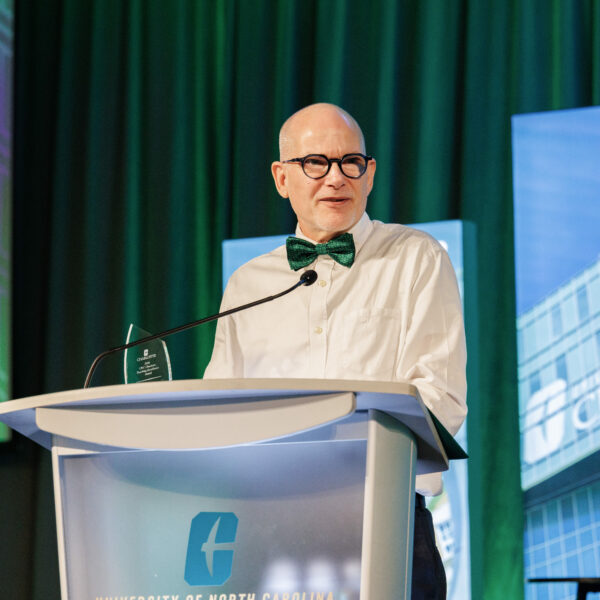
Lansen teaches through an apprenticeship‑style, hands‑on approach that turns the history classroom into a collaborative laboratory. Drawing on decades of work in problem‑based learning and source‑driven pedagogy, he models every assignment he asks students to complete, guiding them to build interpretations through visual analysis, real‑time writing and structured discussion. His method cultivates students as active analysts—and often co‑teachers—reflecting his belief that learning happens best by doing.
“My passion for teaching, guided by my European training and expertise in history, history pedagogy and teaching, continues to motivate my research, didactical collaboration and instructional innovation,” Lansen said. “I am fortunate to have been given the opportunity over my career to help shape the lives of others, optimize instruction and programs, lower barriers to learning, instill growth and perseverance, share expertise and skills, model inquiry and promote student well‑being.”
Lansen’s work has transformed history education at UNC Charlotte and beyond. A teaching professor known for his innovative, equity‑driven instruction, he empowers students through dynamic courses on the Holocaust, Nazi Germany and modern conflict, pioneering visual‑spatial analysis, active learning in large lectures and accelerated skill development for first‑year students.
As co‑chair of Commencement and former chair of the Honors Council, College Curriculum Committee and departmental undergraduate studies, Lansen has shaped academic policy, student success and signature university experiences. A founding member of the Charlotte Teacher Institute and the History Freshmen Learning Community, he has expanded access, built community partnerships and helped establish a need‑based study abroad scholarship that opens global learning to more students.
“Oscar is a highly original and innovative instructor,” said Amanda Pipkin, chair of the Department of History. “From visual analysis to experiential learning to team teaching and learning, he has set new standards for innovative teaching practices in a field long dominated by lecture courses.”